
Your first dress, step by step
The sequence below is the game’s own order of operations: measurements, design book, fabric, cutting, sewing on the mannequin, decoration, delivery. The tags name the source of each step’s mechanical detail.
Open the shop
You start as the town dressmaker with a shop, a window and a bell. The tutorial walks you through the front desk, the cutting room and the store; if you already know how to play, the early commissions are the fastest way to build up fabric stock.
Ring the bell for the next customer
Customers do not queue up in front of you: you ring the bell to summon the next one, which is how the day is paced. This became the rule in the first patch after launch — before that, the next customer simply appeared.
Take the customer’s measurements
Every character is measured, and the mannequin is adjusted to those measurements. Pattern pieces are drafted against that body, so two customers asking for the same dress shape do not get the same pattern. The developers describe this as the point of the game: a bespoke dress is made to fit the person.
Plan the dress in the design book
The design book — the sketchbook — is where the dress exists before the fabric does: mix and match bodices, sleeves, collars and skirts, colour the design, and pin fabric and appliqué ideas to it. Component names in the book are clickable, so you can read what a piece is before you build the outfit around it.
Buy fabric and accessories at the emporium
Take stock of what you own, then shop for the rest: fabric for the body of the dress and accessories for the finish. The review that played the game notes the game encourages buying at least five metres of material per dress so a plan can be completed as intended. The shop stocks over 450 fabrics and over 350 accessories, including sequined fabrics and ribbons.
Cut the pattern — on the grain or the bias
Lay the pattern pieces out on the cloth and cut. The game asks you to find the grain or the bias for each piece first, then arrange the pieces to cut them with as little waste as possible. How you cut shows in the finished garment, and each panel may use a different fabric — so this is a design decision, not admin.
Sew the panels together
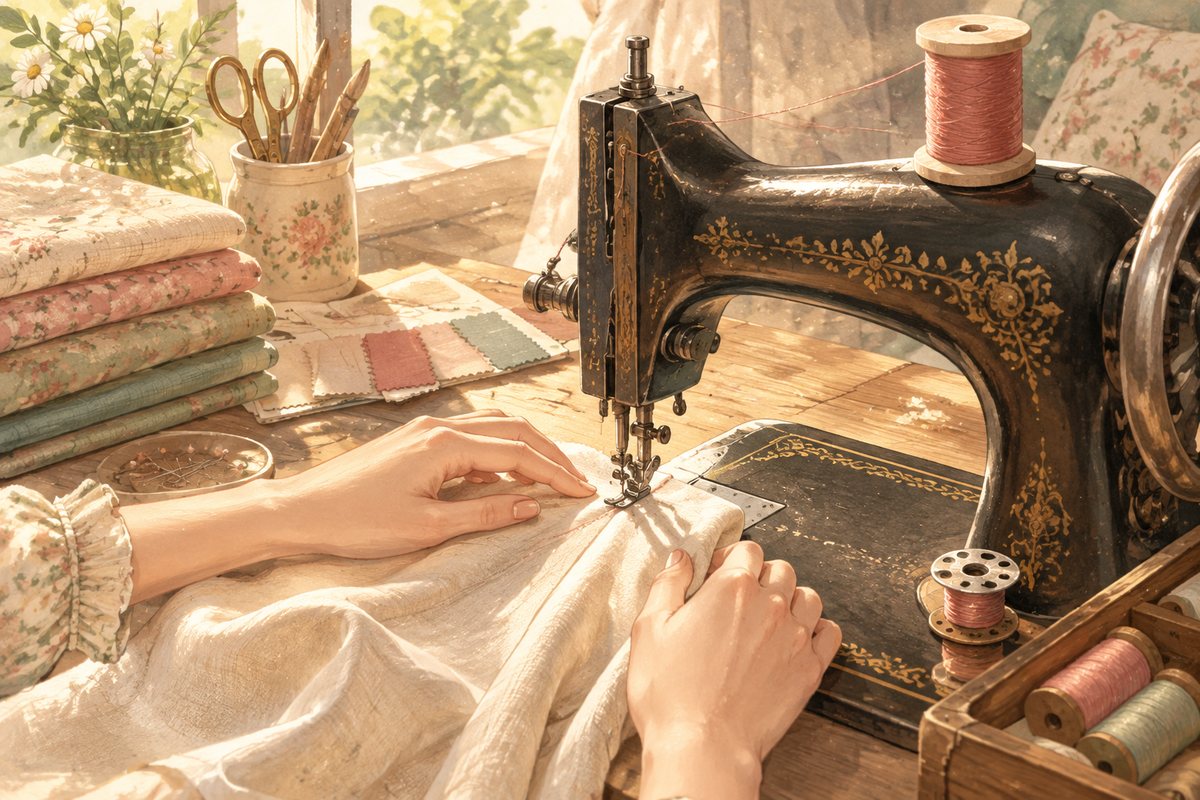
At the machine you assemble the dress panel by panel, following each seam with the cursor and advancing the stitch with the keyboard. Thread colour is yours: click the spools in the sewing scene to change it. Mistakes make the machine clunk and cost you dress quality, so the sewing step is where a careful plan pays off.
Decorate the dress
Buttons, bows, appliqué and lace trims go wherever you like — placement is completely free, there is no slot grid. Trims are tracked by length, which is why one achievement needs more than fifty metres of trim on a single dress, and the game records how many accessories you have placed.
Deliver and get paid
Hand the dress over: reputation and coin are the confirmed rewards. If the customer accepted the commission, you get paid even if the dress does not turn out as intended — a bug the first patch fixed, in the player’s favour. Delivered dresses are scored, and 100% quality on a dress is its own achievement.
Restock the window and sell off the rack
Between commissions, hang finished dresses in the shop window and sell them off the rack. This is a deliberate feature rather than a leftover: the team added it so players could design their own dresses and sell them, and use the income to fund an extra elaborate commission piece.
What customers actually ask for
A commission is a brief, and the dress is judged against it. The clearest account of how those briefs read comes from a review that played the full game.
Occasions drive the request
Townsfolk want dresses for events on their social calendar: workwear, ball gowns, a wedding, and — in the reviewer’s example — a completely black, gothic design for a funeral.
Styles are scored, not guessed
Dresses and their parts carry style scores, and customers want certain categories and scores met. Mixing pieces with the right scores is how a dress fits its brief.
One bad trim can break the brief
The same review gives the cautionary example: a professional dress with a slim cut and pinstripes stops fitting the brief the moment you add a garish pink trim or an oversized brooch.
Requests escalate with the story
Each customer has a major-commissions storyline, and ten achievements confirm all ten of them. Later briefs in a storyline are more ambitious than the opening ones.
How the game opens up
Progression is tied to the story rather than to a shop level or a currency grind.
Unlocks follow the story
The review describes a system of consistent unlocks that adds new, more ambitious dresses after each major quest and narrative beat. The developers mention the same thing when they talk about tuning the unlock progression and tutorials.
From simple dresses to princess gowns
The opening chapter is simple dresses. By the end of the story you are building large, flowing gowns with multiple tiers of fabric and accessories, plus themed outfits — gothic, gardening, and the occasional eye-catching number for the town eccentrics.
About 35 hours of story commissions
The developers put the story commissions at approximately 35 hours, not counting the off-the-rack dresses you design and sell on your own initiative.
The story does not branch
The game’s writer has said explicitly that the story is not branching: you are not locked out of a dress by an earlier decision. Every commission in the game is available to every player.
More content is coming
The roadmap adds an online challenge mode, transparent fabrics, proper controller support, and mobile and Switch ports. Small updates in the meantime add new fabrics and accessories.
Where dress quality comes from
Dresses carry a quality percentage, and it is what the achievement 99 Problems But A Stitch Aint One is built on. What is officially confirmed: sewing mistakes cost quality, and 100% quality is measurable. What is not published is the exact weighting of plan, cut, stitch and decoration — so the honest advice is to keep every step clean rather than optimise a formula nobody has seen.